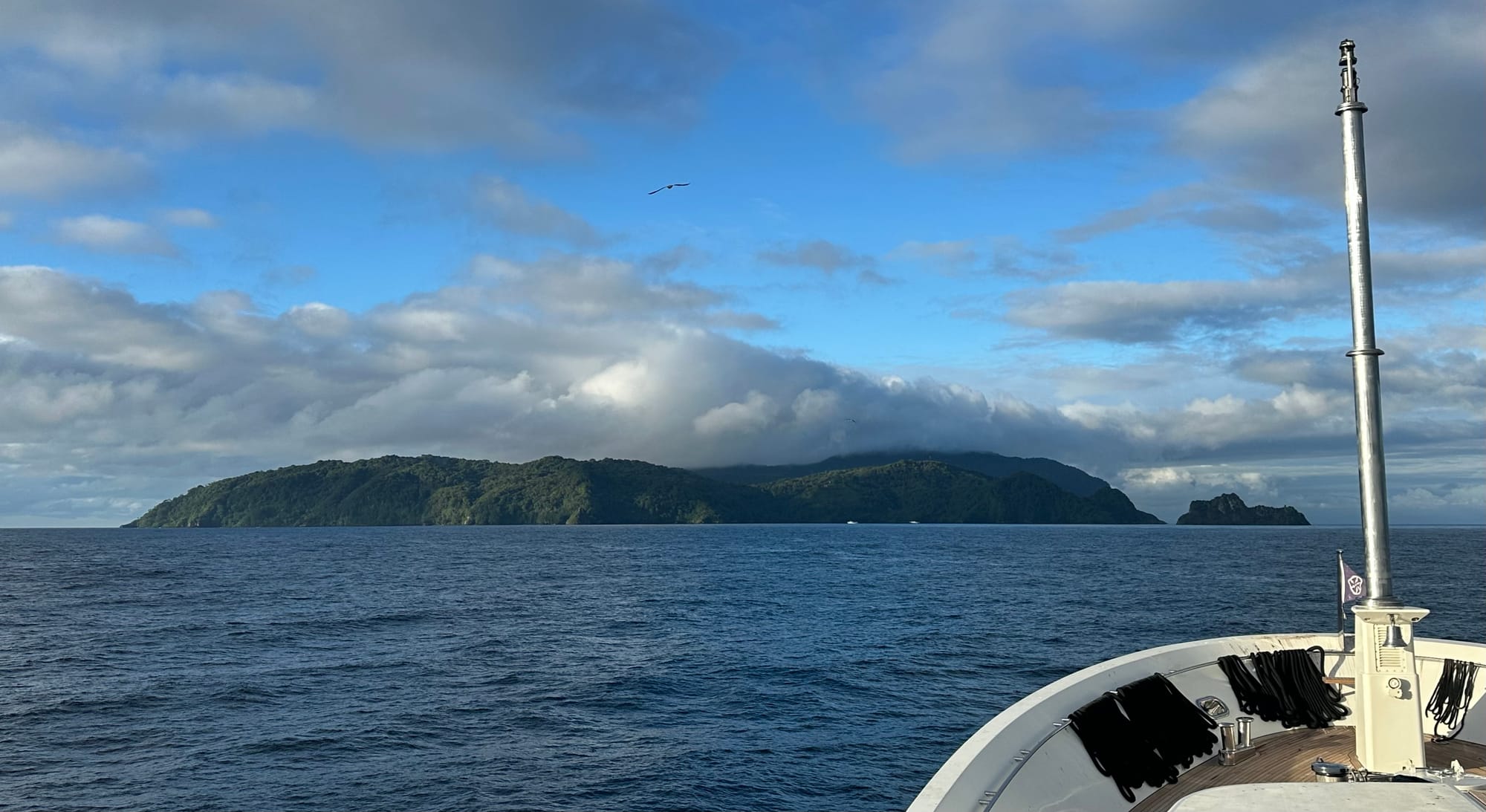
Thankfully, there are still places in the world remote enough that getting there requires genuine commitment, and wild enough that the effort is immediately rewarded. Places that have been spared from mass tourism, ecological harm, and human interference don't just survive — they thrive.
Cocos Island sits 340 miles off the Pacific coast of Costa Rica, alone in open ocean. It takes 36 hours by boat to reach it. There are no restaurants, no hotels, and no infrastructure beyond a small ranger station. Roughly 1,100 people visit per year and almost all of them are divers, coming in search of the incredible marine life that is thriving due to laws prohibiting fishing and harvesting around the island.
Jacques Cousteau called it the most beautiful island in the world. Michael Crichton loved it so much he used it as the model for Isla Nublar in Jurassic Park. Robert Louis Stevenson is said to have used it as inspiration for Treasure Island — and that is not entirely metaphorical.
We departed from Golfito in southern Costa Rica and arrived early one November morning to find the island draped in verdant canopy — dense jungle cascading over volcanic rock, birds circling, and fish jumping all around us. Arriving somewhere where the ocean, the sky, and the land are buzzing with life tells you you're somewhere special. Somewhere not everyone will be lucky enough to visit in their lifetime.
The treasure
Cocos has been a stopping point for pirates, whalers, buccaneers, and explorers since the 16th century. The most enduring legend involves the so-called Treasure of Lima. In 1820, as revolution threatened Peru, the Spanish Viceroy entrusted a British captain named William Thompson to transport the city's vast wealth — gold, jewels, and religious artifacts — to safety by sea. Thompson and his crew instead murdered the guards aboard, sailed to Cocos Island, buried the treasure, and disappeared. Thompson was eventually captured, agreed to lead the Spanish back to the burial site, then escaped into the jungle and was never seen again.
The treasure has never been found. By the mid-20th century the Costa Rican government, exhausted by treasure hunters tearing up the landscape, banned all digging and excavation on the island entirely. Today the island is a protected national park and all excavation is prohibited.
The rocks of Chatham Bay
Justin has a personal connection to these islands, and we went on a mission to find a sort of long-lost family treasure. We loaded up some crew who were keen for an adventure, took a dinghy to shore, beached it, and walked toward the forest edge. The rocks of Chatham Bay beach are covered in inscriptions — names, dates, and boat names carved by visiting sailors going back to the late 17th century. Pirates, whalers, explorers, adventurers passed through and left their mark. Costa Rica considers the carvings significant enough to have declared the island an Architectural Historical Heritage site partly on their account.
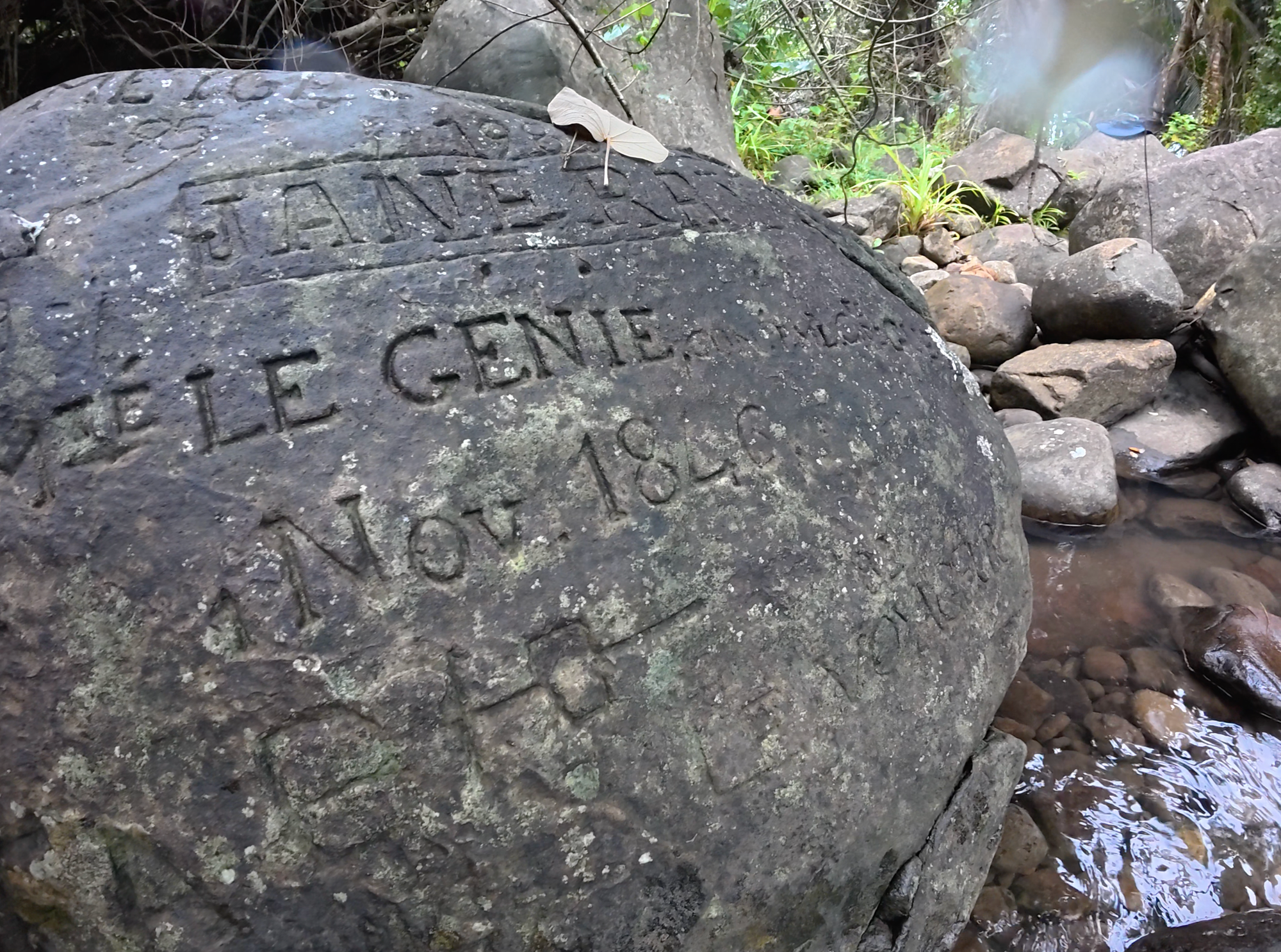
We were looking for one carving in particular. In 1991, Justin's mom and stepdad had sailed to Cocos Island and carved their boat name into one of those rocks near a waterfall. Somewhere among centuries of inscriptions was their mark. We were determined to find it.
The muddy hike to the summit
We were also on a mission to get to the top of the hill in Chatham Bay which involves navigating slippery switchbacks and loose rocks all the way up to the ranger station — a steep, muddy, thoroughly undignified climb that leaves you covered head to toe in mud by the time you reach the enormous flagpole at the top. It rained off and on during our time at Cocos, enough to keep the trail nice and slippery for us. We all wore neoprene diving booties which were helpful on the way up, but not so much on the way down. No one escaped the day without a new bruise or bump to show for it. The effort was totally worth the reward. Fortunately, the cold freshwater spring and waterfall was waiting just near the beach. We jumped in without hesitation, washing mud and sweat away, and considered this to be a far more rewarding treasure than pirate's booty.
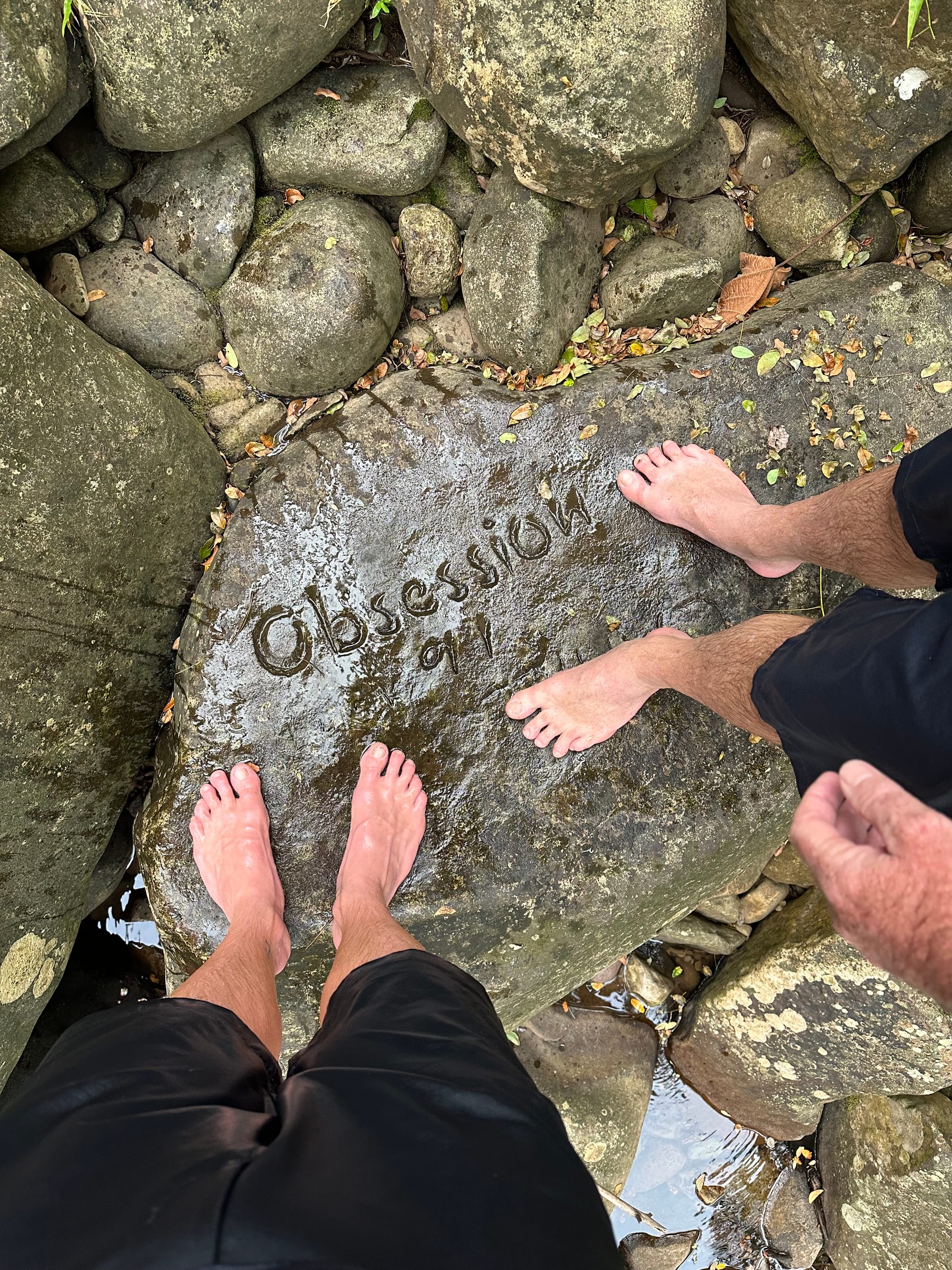
The little path that cuts off the trail and leads to the whirlpool is rocky and requires some careful footing. Just to the left of the trail on the way to the pool, Justin finally found his treasure. The stone marked "Obsession." Standing by a waterfall on a remote island in the Pacific, Justin found the same rock that his mom and stepdad had spent a day carving their boat's name into almost 35 years prior. Sharing the moment with his 19-year-old son made it all the more special. Justin's oldest son Tom had grown up hearing stories about Ingrid and Gary's sailing adventures on Obsession and was in awe reliving this part of their history.
Voluntarily invalidating your passport
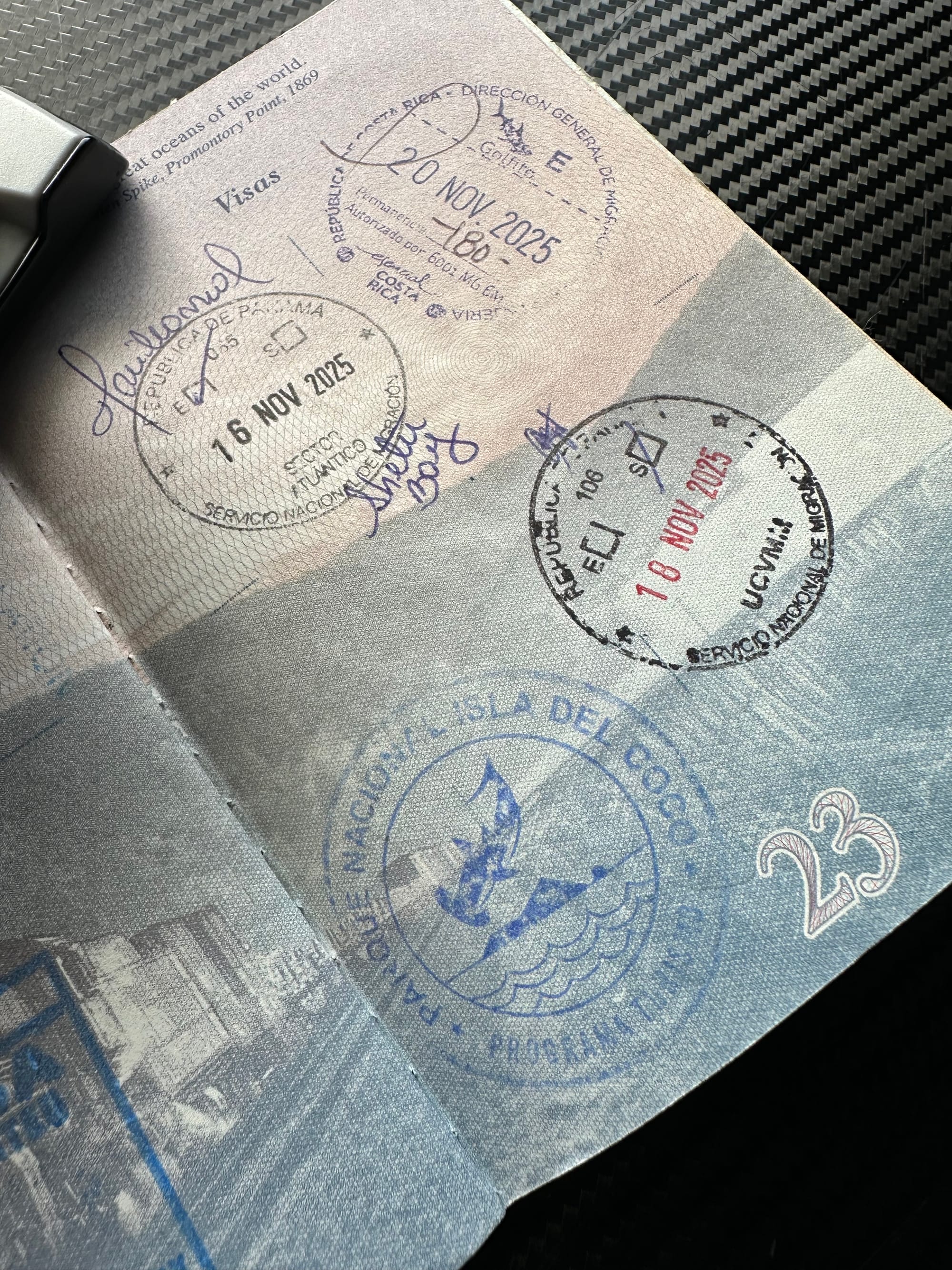
One more thing worth knowing: Cocos has its own passport stamp featuring a hammerhead shark. It is considered a "souvenir stamp" and technically invalidates your passport, so stamp at your own risk! I only had two free pages left in my passport which renders it invalid for travel to many countries, so I was due for a new one anyway. Our dive guide asked the rangers nicely if they could bring the stamp to the boat, and we traded a bunch of snacks and fresh provisions for them to leave the stamp with us for a few hours. If you're reading this and are determined to get the stamp, I would suggest bringing a fresh blue ink pad… the stamp was running low on ink and despite the seemingly endless nature of our stationery cupboard on the yacht, we found ourselves lacking for anything to help.
The fun part…diving!
I'll be honest — I was a little apprehensive about getting in the water. Cocos has a reputation for aggressive shark behavior and for good reason. In 2017, a female tiger shark killed an American diver at one of the Manuelita dive sites during her ascent to the surface. That same tiger shark was known for being a bit more than curious and verging on aggressive to other divers in subsequent years. Our dive guides informed us during our trip that the female tiger shark was well known to locals and had recently been caught and killed.
Just recently, in September 2025, renowned shark researcher Dr. Mauricio Hoyos was bitten by a Galapagos shark at Roca Sucia (Dirty Rock) while attempting to tag it — the shark put his entire head inside its mouth, leaving him with 27 puncture wounds and serious injuries to his face and skull. He survived. He tagged the shark just before it bit him, plans to track her, and intends to return to Cocos to find her again.
None of this is a reason to stay out of the water. It is a reason to dive with experienced guides, respect the environment you are entering, and understand that Cocos is a functioning apex predator ecosystem — which is precisely why it is extraordinary.
Scalloped hammerhead sharks are the headline — one of the few remaining places on earth where they gather in genuine schools. Cocos is also known for whale sharks, manta rays, whitetip reef sharks, silky sharks, dolphins, tuna, and massive schools of various fish. The rosy-lipped batfish — an endemic species that walks along the seafloor on its fins and appears to have been assembled from spare parts — makes occasional appearances for those paying attention to the smaller things.
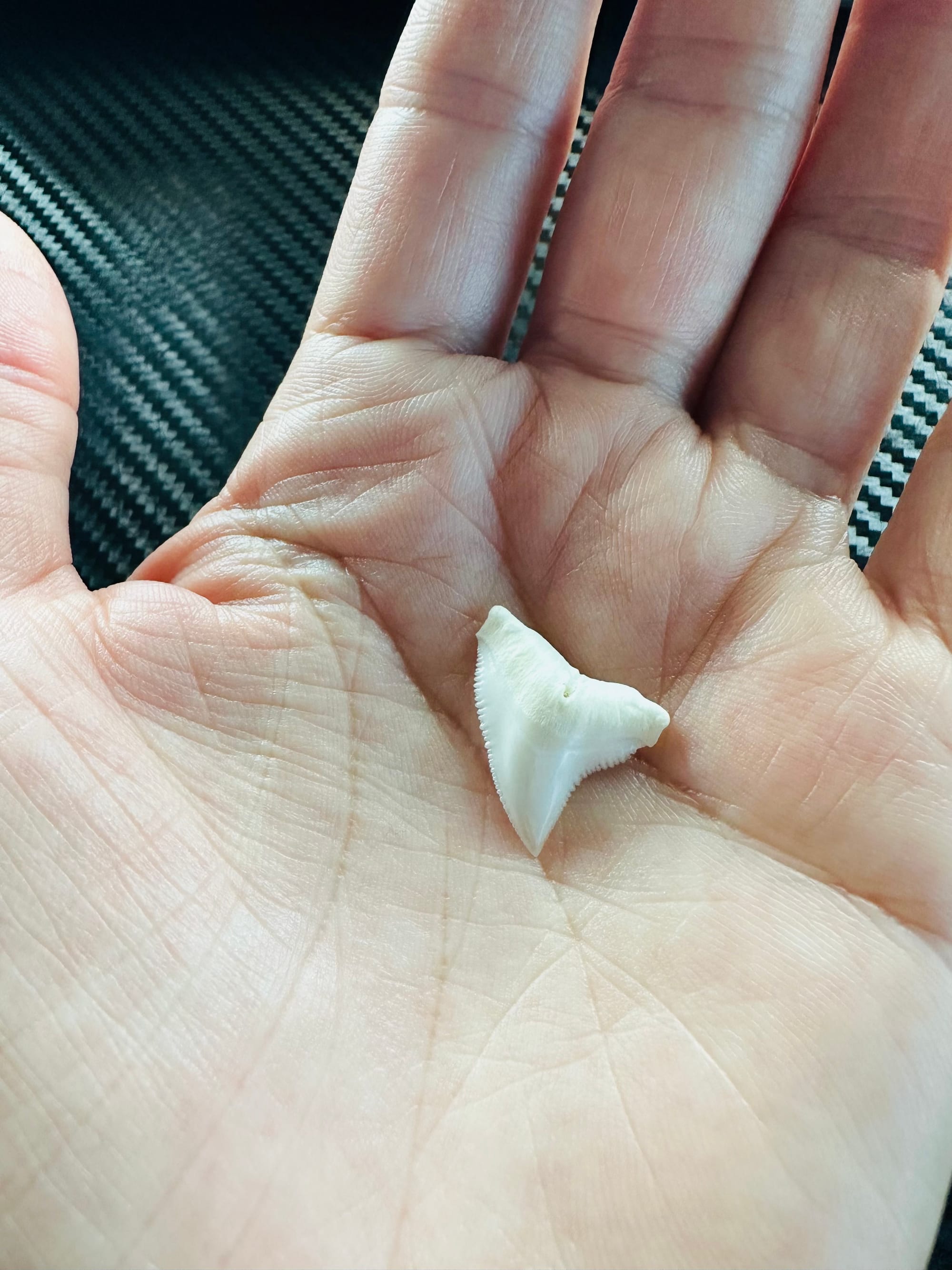
My favorite site was Alcyone — a seamount named after the Cousteau Society vessel that surveyed it. The marine life there is extraordinary even by Cocos standards. On our second dive there, and our last dive of the trip, I found a perfectly smooth tiger shark tooth nestled in a sandy patch on top of the rock. I found my Cocos treasure. I am not entirely sure if you're allowed to take teeth, but I showed our dive guides who helped identify it for me and didn't seem at all bothered by me keeping it. Please make sure you don't keep shells from dive sites though. In my experience, 75% of shells have critters in them even when the collector is "positive" it's empty. Also, an empty shell can be the future home of something living.
The park covers more than 780 square miles of protected ocean with over 20 named dive sites. All diving is coordinated through park headquarters to ensure no site has more than one group at a time — one of the more sensible conservation policies in dive tourism, and you feel the difference underwater.
When to go
Calmer seas and better visibility run from January through May. The wetter months of June through November bring rougher conditions but larger concentrations of hammerheads. There is no bad time — only different trade-offs.
Worth knowing
Cocos Island is a UNESCO World Heritage Site, a national park, and a Ramsar Wetland of International Importance. The sharks are there because someone fought for them to be there — rangers who spend months at a time on the island keeping illegal fishing vessels out of the water. That is worth remembering when you are watching a hundred hammerheads move through the blue.
The real treasure was never gold. Anyone who has dived Cocos already knows this.
Sources
The island & its protections. UNESCO World Heritage Centre, Cocos Island National Park (inscribed 1997; the marine values and shark aggregations); the park's designations — World Heritage Site (1997), Ramsar Wetland of International Importance (1998), Architectural Historical Heritage of Costa Rica (2002), Marine Conservation Institute Blue Park — via Blue Nature Alliance and the Marine Conservation Institute (platinum Blue Park, 2025).
The dive facts. Divers Alert Network, "Cocos Island" — the 780-plus square miles, the 20-plus named dive sites, and the one-group-per-site scheduling out of Chatham Bay; island distance and the 36-hour crossing corroborated by Britannica and AP reporting (below).
The 2025 shark bite. The Associated Press, via CBS News (Dr Mauricio Hoyos, 48, bitten Saturday 27 September 2025 while tagging a roughly four-metre Galápagos shark; head, face and arm injuries; the 36-hour evacuation); The Tico Times (the Roca Sucia / Dirty Rock site, ~30 m depth, severed air hoses) and Divernet (the shark's defensive reaction to tagging).
The 2017 fatality. The Associated Press, via CBS News (an American diver killed by a female tiger shark near the island; her dive guide seriously injured; described as the first such attack near the park).
The bite, first-hand. The fuller detail of Dr Hoyos's injuries — the shark taking his head into its mouth, and the count of puncture wounds — comes from the dive guide who was present at the incident, later aboard Amadeus with us at Cocos. It is a primary, eyewitness account, more direct than the wire summaries, which carried fewer specifics.
Further Reading
For those who want the island from other angles — the science, the conservation fight, and the shark's-eye view of that bite.
The conservation case. The Marine Conservation Institute's Blue Park profile on why Cocos rates among the world's strongest marine protected areas — and the permanent ranger presence that keeps illegal fishing out.
The bite, in his own words. Dr Hoyos told the BBC the shark "spared his life" and that the bite was defensive, not predatory — a useful corrective to the "aggressive shark" framing, via BBC Mundo.
The official inscription. The UNESCO World Heritage listing, for the formal account of what makes the island — the only tropical rainforest island in the eastern Pacific — worth protecting.