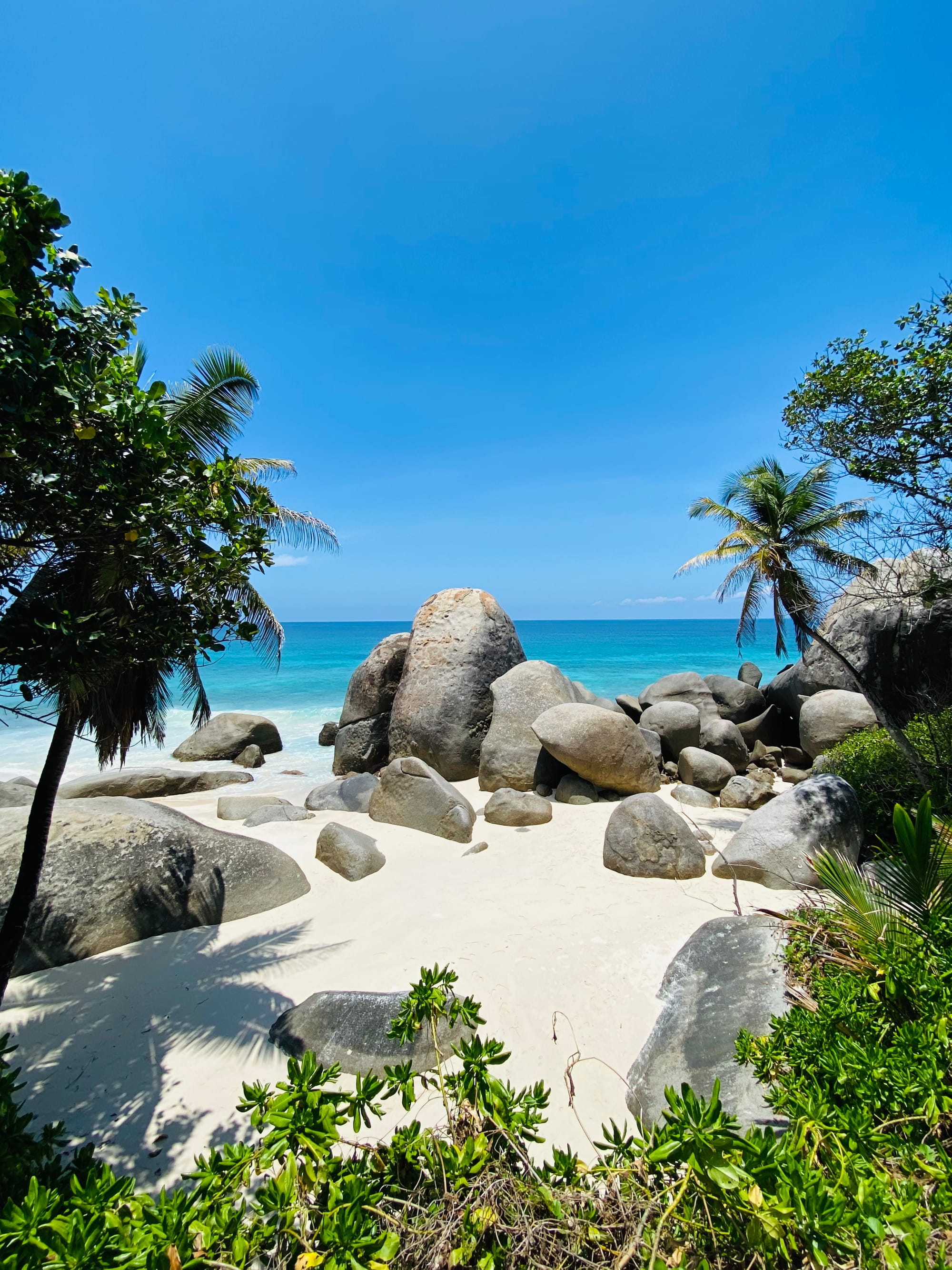
If you have ever tried to buy a birthday present for someone who has everything, you will understand the particular desperation that led me to purchase a legally regulated, government-tagged, anatomically notorious giant nut via WhatsApp negotiation on a dock in the Seychelles. That is exactly what I did. Let me tell you the story.
I. What it is
The coco de mer is unlike anything else on earth. Its tree produces the largest seed in the plant kingdom, weighing up to 20 kilograms, shaped — there is no delicate way to say this — unmistakably like the human female pelvis. It grows only on two islands in the entire world: Praslin and Curieuse in the Seychelles. The palms are slow, ancient things — they can live for over 200 years — and the male and female flowers grow on entirely separate trees, which, as you will see, only adds to the legend.
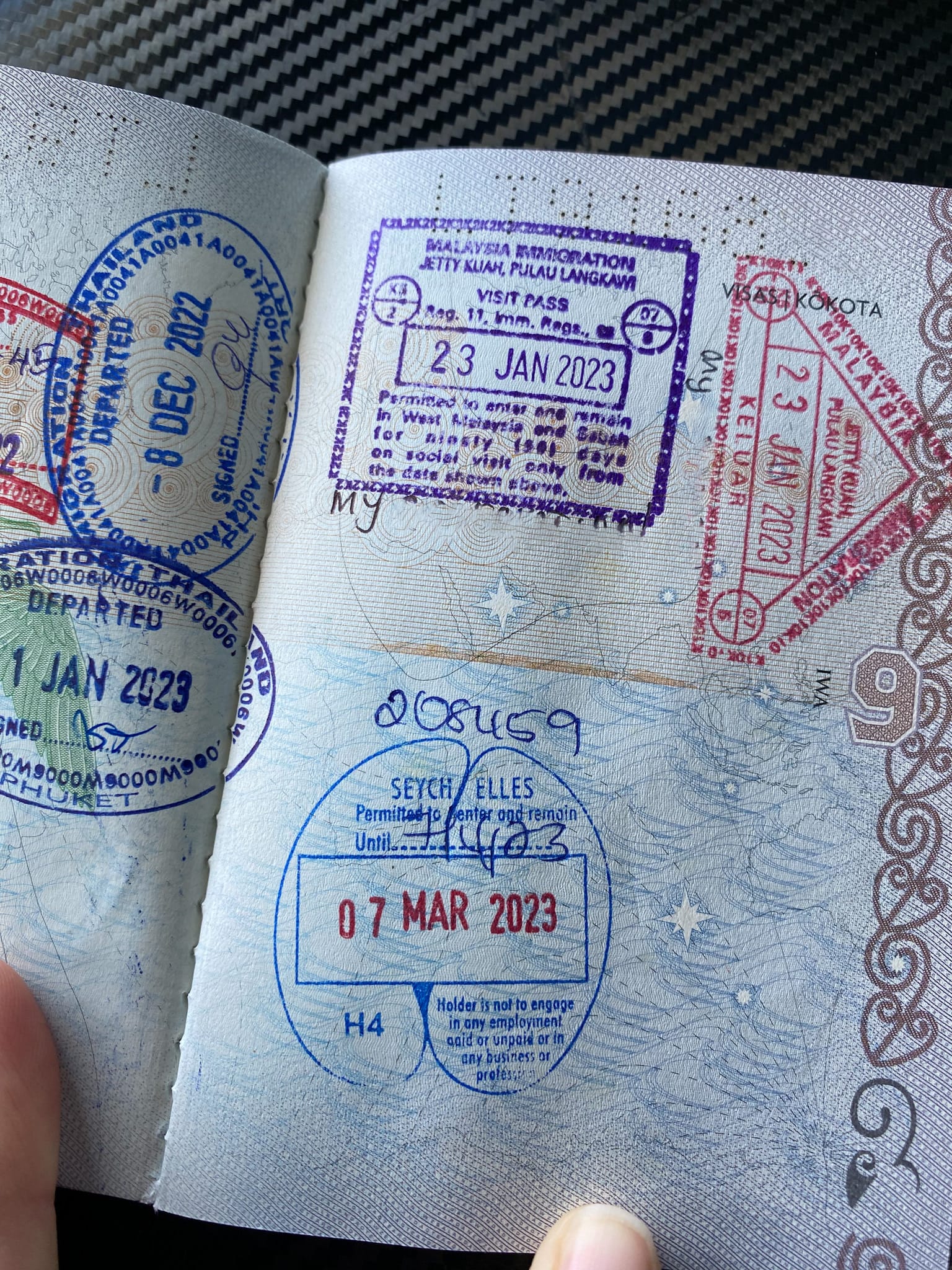
In Seychellois Creole it is called coco fesse — which translates, with complete accuracy, as “bottom coconut.” It features on the national coat of arms, on the currency, and is the shape of the stamp you get in your passport when you visit the country. It is, in every sense, a national treasure.
II. The folklore
For centuries, before the Seychelles were properly mapped, the nuts would occasionally wash ashore on distant beaches — the Maldives, India, Sri Lanka, the Arabian Peninsula — and nobody knew where they came from. Malay folklore held that they grew on a magic tree at the bottom of the sea, rising from a great underwater whirlpool known as the “Navel of the Seas.” Kings and emperors collected them as objects of extraordinary power and prestige. A coco de mer was once worth more than a ship laden with spices.
Then there is the other legend. The male tree produces strikingly phallic catkins, and the resemblance of both trees to human anatomy gave rise to the folklore that on dark stormy nights, when no one is watching, the trees uproot themselves and meet in passionate embrace. The legend holds that anyone who witnesses this dies, or goes blind. The pollination process of the coco de mer, even today, is not fully understood.
III. The legal situation, which is where it gets interesting
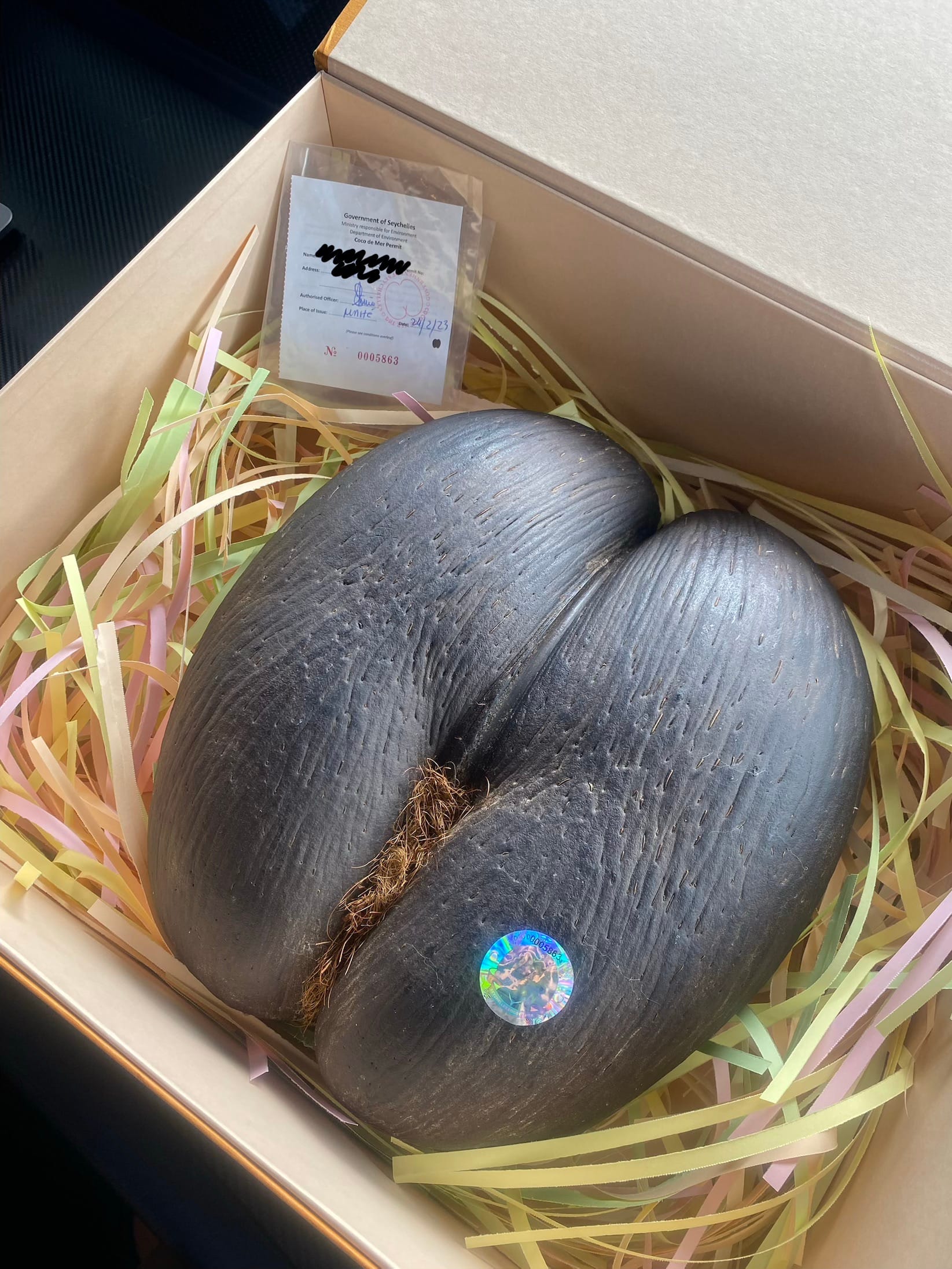
Buying a coco de mer is not a casual transaction. The nuts may only be legally sold and exported by licensed dealers, and every legally obtained nut must come with an official government-issued identification tag — essentially its passport. Possession of a nut without a valid tag is an offense. So is being unable to prove with valid documentation why you have one. The penalties include substantial fines and potential imprisonment. The Seychelles takes its coconuts seriously.
Nuts typically fetch between $450 and $750 each. The larger and more symmetrical the nut, the higher the price. For export, they are hollowed out, dried, and polished — the visual impact of which, if anything, is intensified by polishing.
IV. How the deal went down
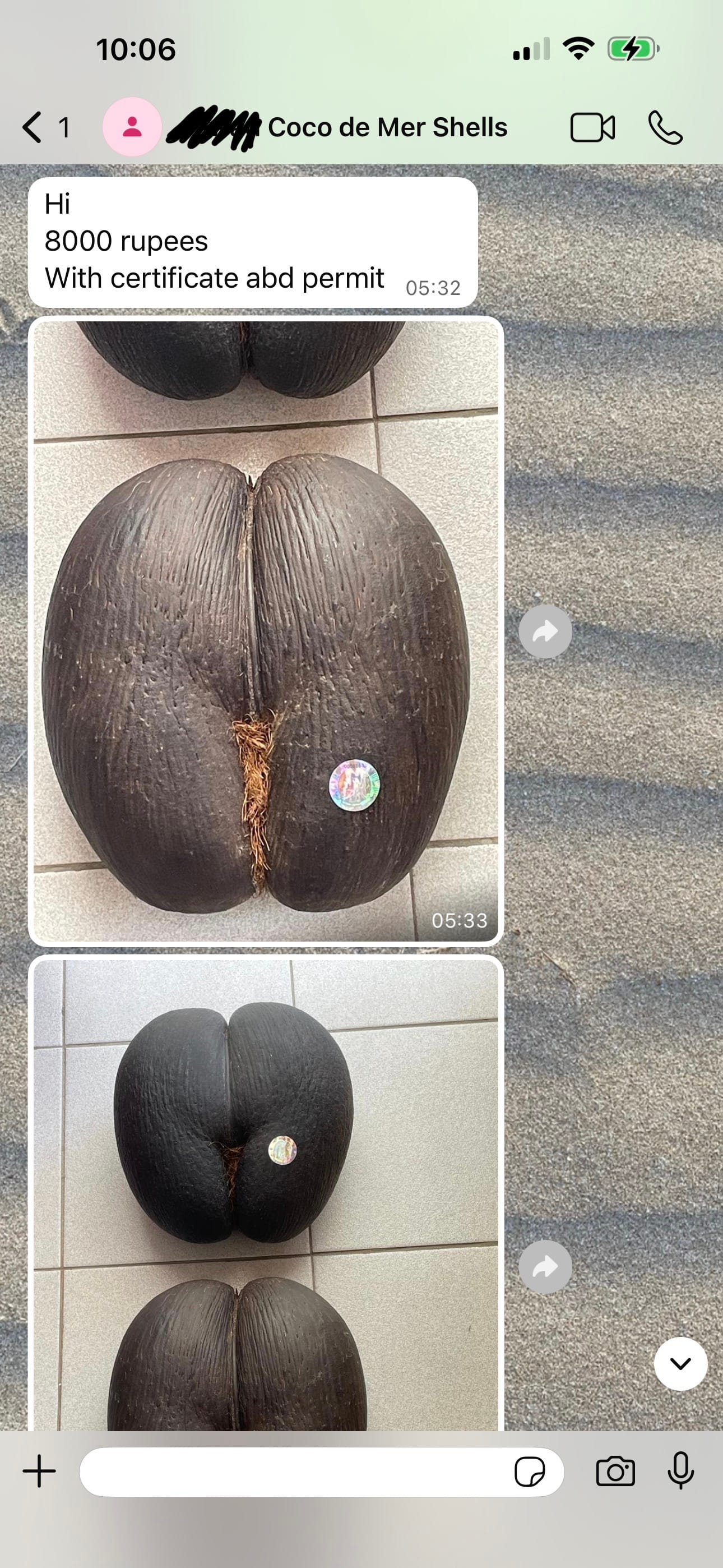
We were docked at Eden Island in Mahé when I decided a coco de mer was the perfect gift for someone who has everything. I asked a few locals and eventually got the number of someone who was rumored to have a few for sale. What followed was a WhatsApp exchange that I can only describe as the most surreal procurement process of my career at sea. Photos arrived. Weights listed. Prices quoted. Different specimens were offered and assessed. It felt, unmistakably, like a drug deal — conducted entirely in broad daylight about a coconut with government paperwork.
I had nine nuts to choose from and eventually chose the smoothest and most symmetrical with a little tuft of hair…between the mounds. We settled on a price of 8000 Seychellois Rupee (about $590 USD) and a place to meet the following morning.
We met at a café, I inspected the nut and the paperwork, paid, and walked down the dock carrying my prize.
V. The gifting
At her lavish party at the yacht club, the birthday girl — a woman who genuinely has everything — perked up at the sight of a rather large Louis Vuitton box, opened it, stared at it for a moment, and started hysterically laughing. An appropriate response for someone who perhaps was excited about a new hand bag. She now owns one of the rarest seeds on earth, a piece of Seychellois national heritage, a nut that royalty used to value above their own ships, and a story she will be telling for years.
Which is, in the end, the best kind of gift.
Further Reading
The Vallée de Mai: UNESCO World Heritage entry for the Vallée de Mai Nature Reserve on Praslin, the primary native forest of the coco de mer. One of the smallest UNESCO sites in the world.
The species and its conservation: IUCN Red List entry for Lodoicea maldivica, the coco de mer, listed as Endangered. Seychelles Islands Foundation, which manages both Vallée de Mai and Aldabra and is responsible for the species' protection.
International trade regulation: CITES Appendix III listing for the coco de mer, the international convention that governs its trade.
The history and folklore: Royal Botanic Gardens, Kew — coco de mer species profile, including the centuries during which the source of the nuts was unknown and the “Navel of the Seas” legend prevailed. BBC Travel — on the species' legend, its place in Seychellois culture, and the export market.