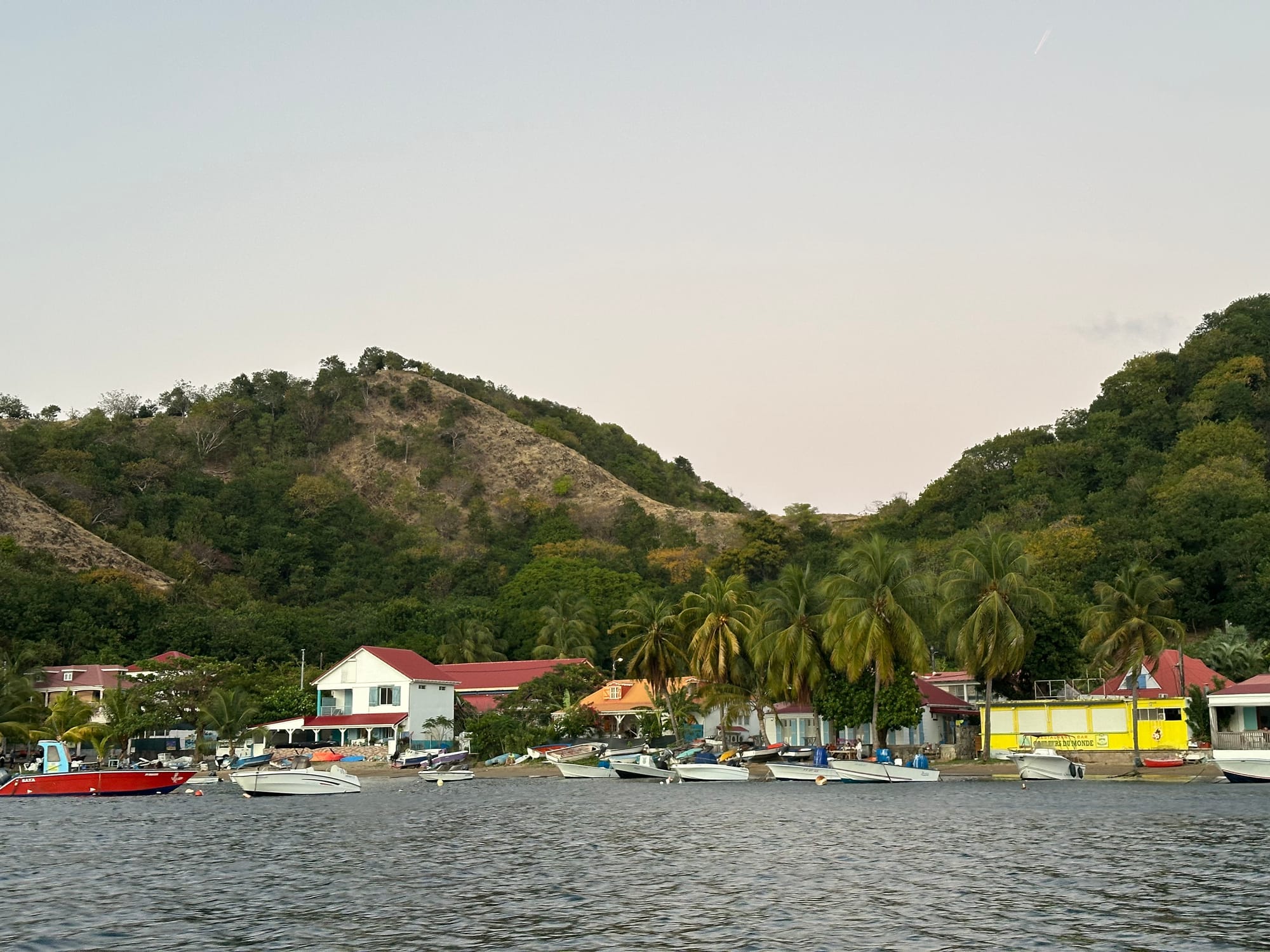
Ten kilometers south of Guadeloupe, a cluster of eight small volcanic islands sits in the Caribbean Sea. Most of them are uninhabited. Two of them are just about the most quietly beautiful places in the Lesser Antilles.
Before any European set foot here, the Arawak and Kalinago peoples were visiting these islands from neighboring Guadeloupe and Dominica to hunt and fish. No one lived here permanently — the islands had no fresh water source. Columbus spotted them on November 4, 1493, three days after All Saints' Day, and named them Los Santos. The French kept the name when they arrived, just changed the spelling. The French and British would fight over them for the next century, with the French prevailing in 1815.
Naval War History
In April 1782, one of the most consequential naval battles in Caribbean history was fought in the Canal des Saintes — the channel that runs between these islands and Guadeloupe. The French fleet under Admiral de Grasse was sailing to join Spain in a planned invasion of Jamaica, fresh from helping America win independence at Yorktown the previous year. The British fleet under Admiral Rodney caught up with them here.
Over four days, Rodney pioneered the tactic of "breaking the line" — sailing his ships through a gap in the French formation and firing from both sides — throwing the French fleet into complete disorder. The French suffered up to 15,000 casualties. De Grasse was captured, the first French admiral ever taken prisoner. The planned invasion of Jamaica was abandoned. When news of the defeat reached peace negotiations, American diplomats realized French support was no longer reliable and agreed to terms they had previously refused. A naval battle in this quiet channel helped shape the final terms of American independence.
It is worth keeping that history in mind when you are looking down into the blue from the dive boat. Somewhere below you are the remains of that day.
Sitting in that channel, barely 15 meters below the surface at its peak and dropping to 300 meters at its base, is Sec Pâté — a submerged volcanic pinnacle whose name translates roughly from French as "the rock shaped like a loaf." It is one of the most celebrated dive sites in the Caribbean, and it was one of my favourites from our winter Caribbean season.
Terre-de-Haut
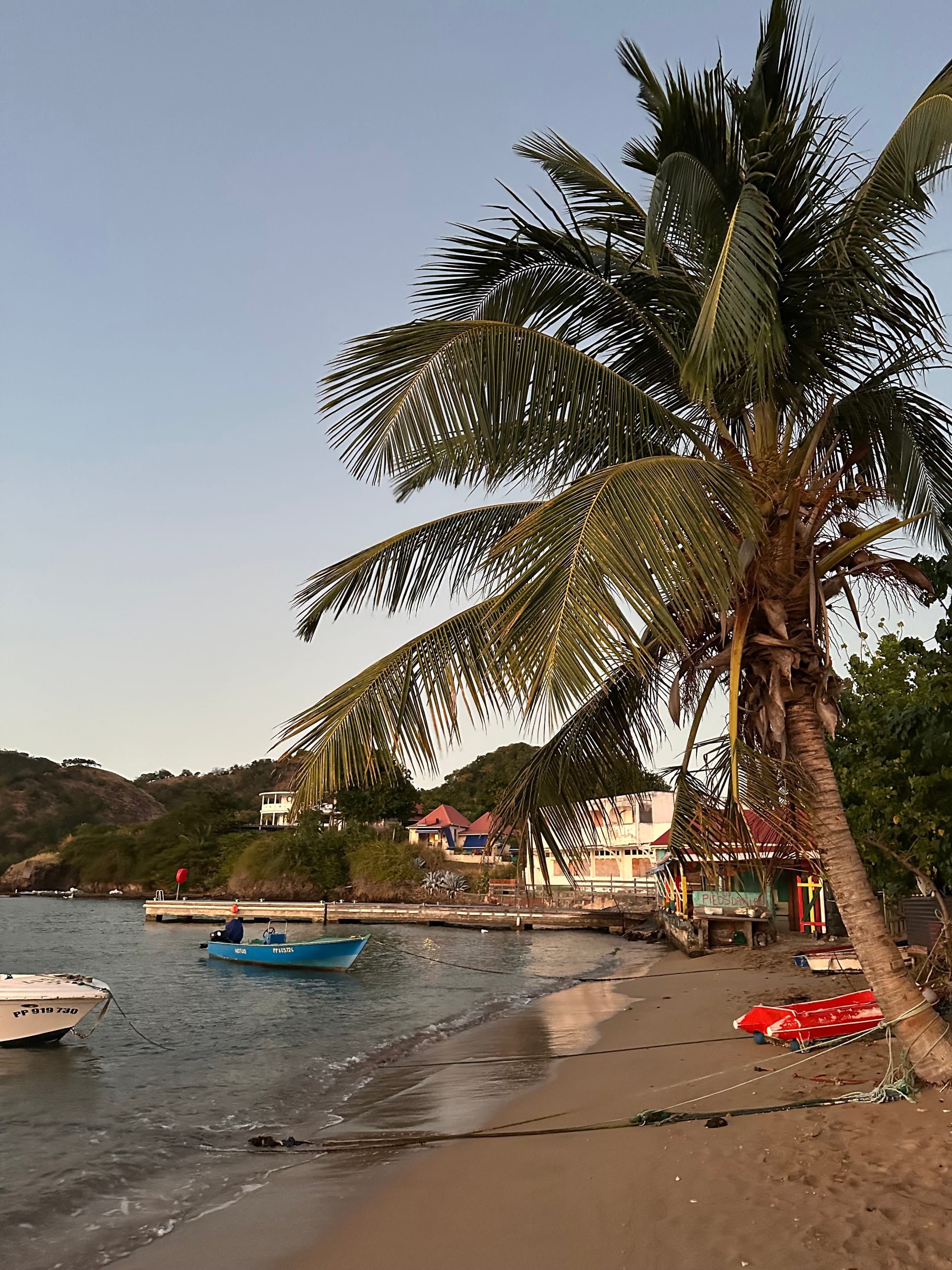
We arrived by boat into the Bay of Les Saintes, consistently ranked among the most beautiful bays in the world. On this January morning, it was blowing 40 knots with seas of 2 meters or more. Pulling into the sanctuary of the bay was a pleasant refuge. Colorful houses with red roofs climb the hillside above a harbor busy with fishing boats. Terre-de-Haut is small enough to walk end to end in twenty minutes. Its entire village consists of two streets running parallel to the water. There are no cars — the island runs on electric scooters and golf carts, which keeps the streets quiet and the air clean.
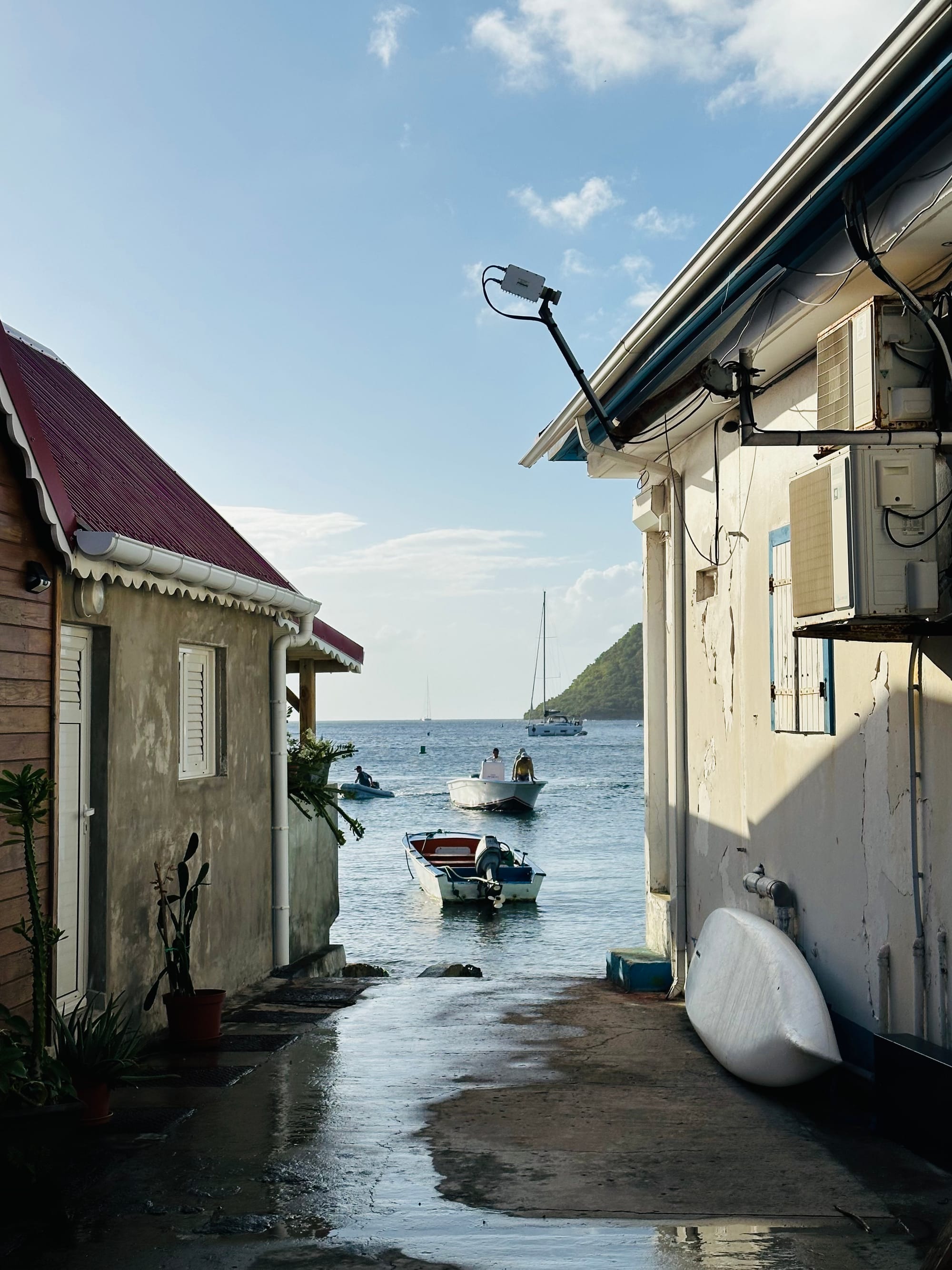
Walking those two streets feels like stepping into a place where a different set of values operates. There are no fast food chains, no urgency, nothing hectic. The pace is slow and entirely unapologetic about it. It is deeply French and deeply Caribbean at the same time — good coffee, Creole cooking, bougainvillea climbing every wall, iguanas sunning themselves on rocks and protected by law.
Most visitors arrive as day trippers from Guadeloupe — the ferry from Trois-Rivières takes just twenty minutes — which means the island fills up during the middle of the day and quietly empties again in the afternoon. Staying overnight is the way to actually experience it. People come for the beaches, which are genuinely exceptional. Others come to hike — Le Chameau, the island's highest point at 309 meters, offers views stretching across the full archipelago to Dominica and Marie-Galante on a clear day. Fort Napoléon sits above the bay and houses a museum dedicated to the Battle of the Saintes. If the history of what happened in this channel interests you, the climb is worth it.
The original settlers were Breton and Norman sailors who arrived in the 17th century. Their descendants, the Saintois, are still here, and fishing remains central to daily life. They have their own traditional wooden sailing vessel — the saintoise — which you will see in the harbor. The cemetery near the village airstrip is worth a few minutes of your time. The names on the weathered headstones reflect Breton and Norman ancestry, and the graves are decorated with conch shells placed in honor of sailors lost at sea.
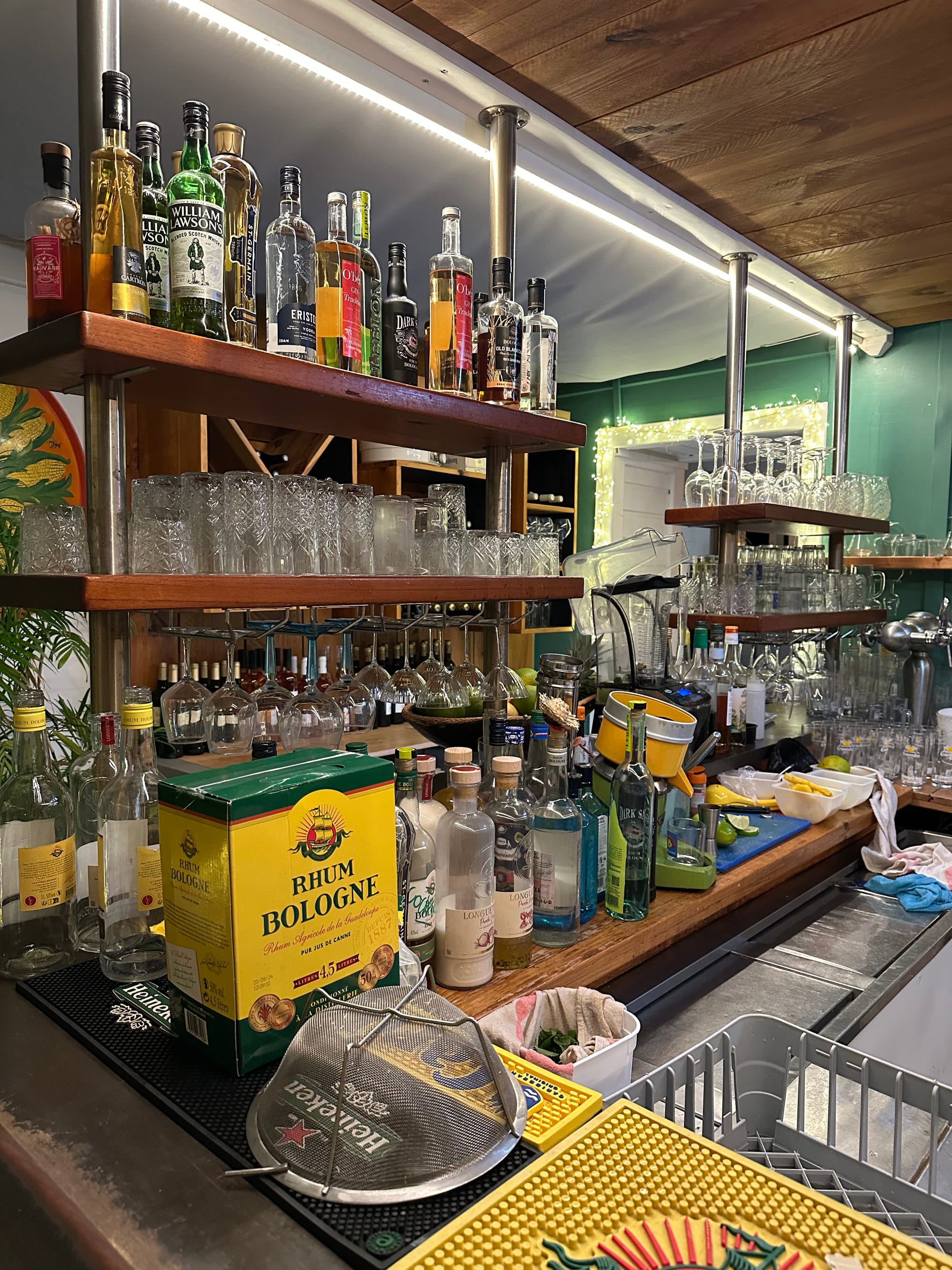
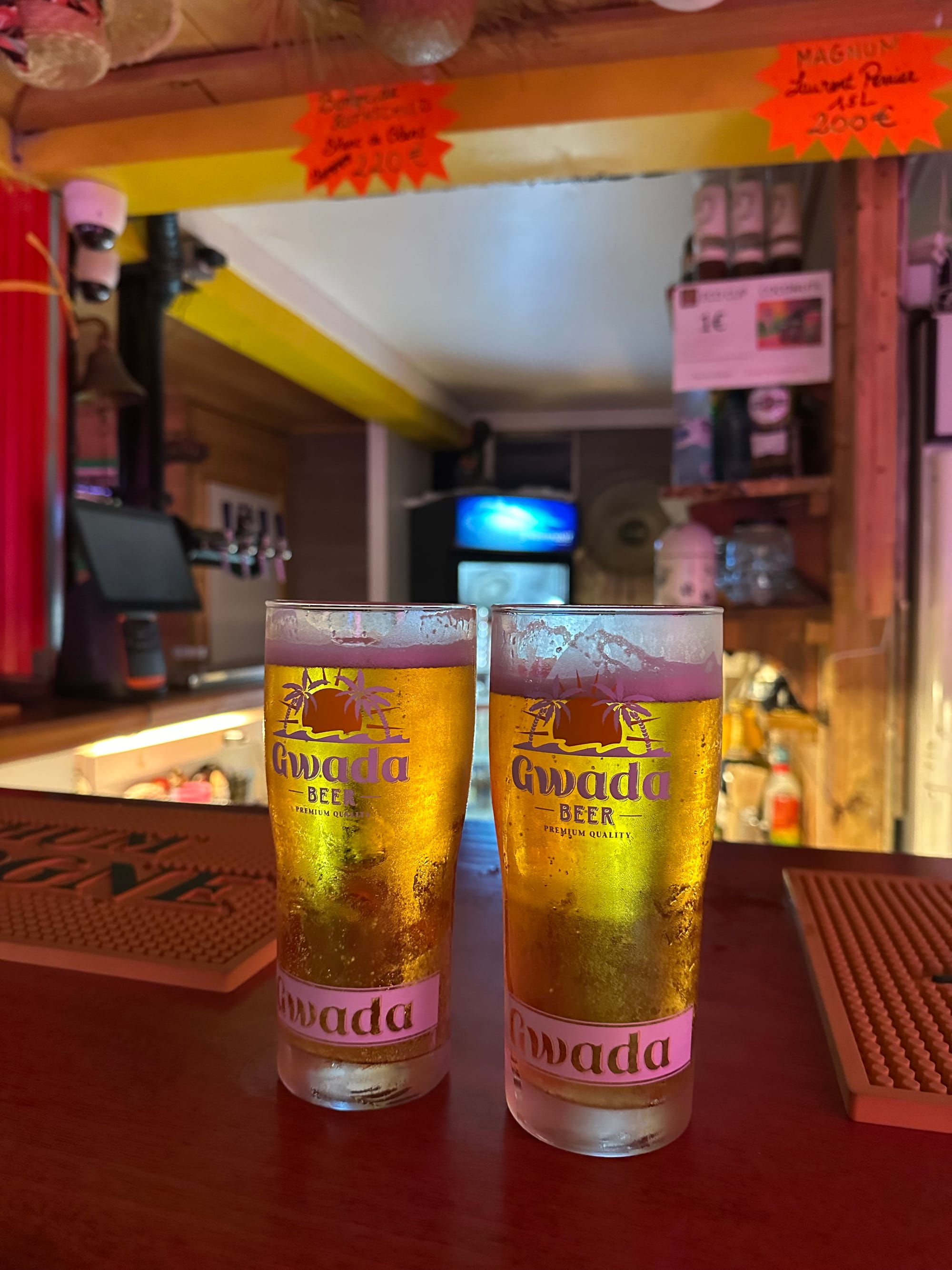
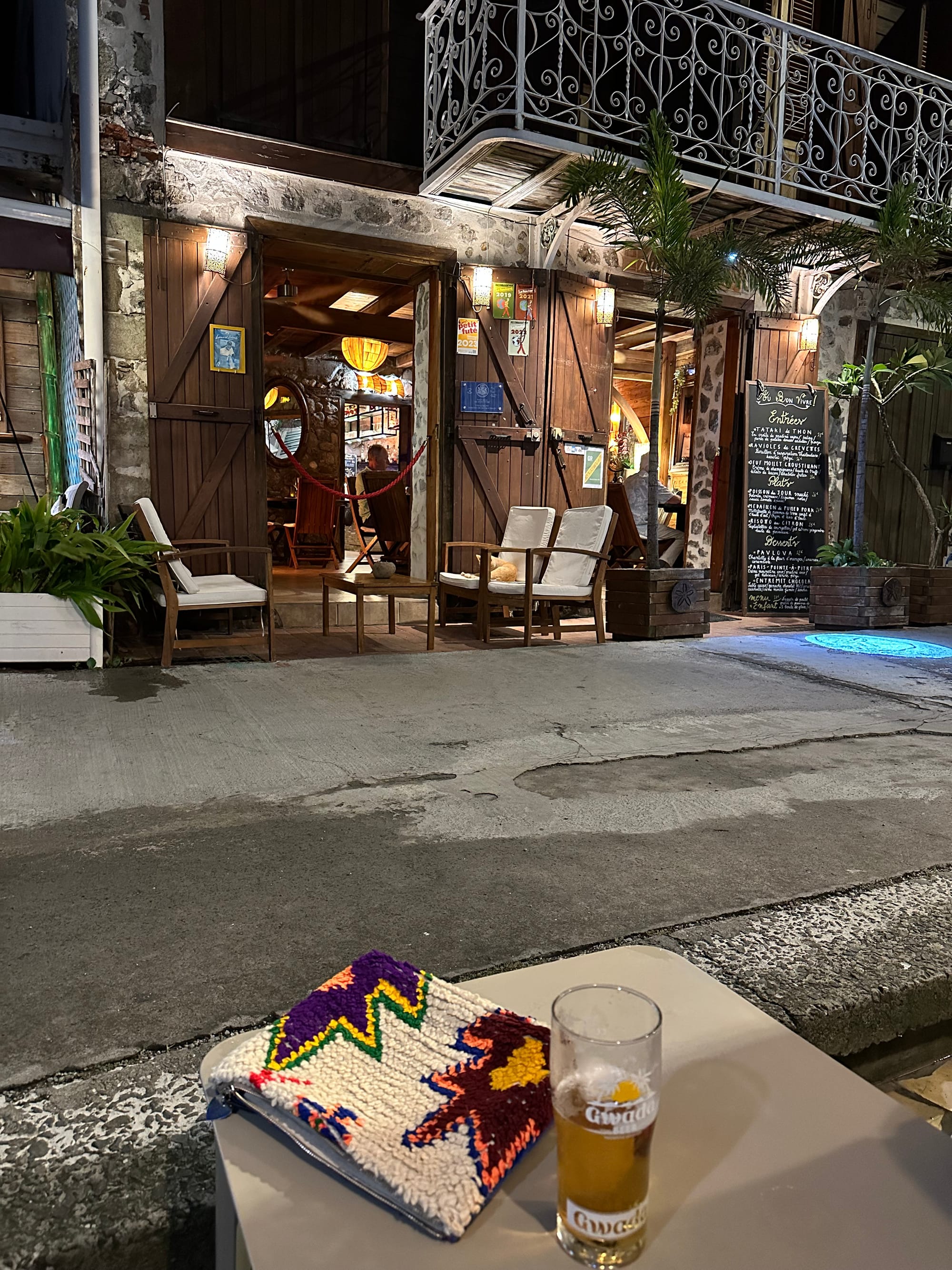
The shopping is genuinely good too: chic sarongs, woven bags, goods from local artists — small boutiques that feel like they reflect the local culture. On our night ashore we ended up at a local bar called Coconuts, cold Gwada beers in hand — Gwada being local slang for Guadeloupe, the beer itself brewed on the island next door.
Sec Pâté
The pinnacle sits in open water in the Canal des Saintes, about fifteen minutes by boat from Terre-de-Haut. It is not a dive for beginners and conditions can change quickly — this is an exposed site in a channel with strong current.
On our first dive there we had two-meter seas and wind gusting to 35+ knots. This site requires a negative entry so you can swim for the mooring line and the pinnacle as soon as you enter, or else the current will sweep you off the site and your dive boat will have to retrieve you to try again. Our free diving fins were much appreciated for this dive. Once you're down, the reward is immediate. Exceptional visibility, dense colorful sponges and soft, healthy coral covering the pinnacle walls, turtles everywhere you look, giant moray eels, and schools of angelfish and surgeonfish. The pinnacle has several peaks and there's an endless amount to explore.
The turtles here must all be munching on some kind of seaweed because they are so friendly. They were not at all bothered by divers and were completely content to continue napping, snacking, or swimming as we watched. At any given time on the site, I could see at least two turtles, one of which was often swimming to or from the surface for a breath.
Despite it being a well-known dive site, we actually didn't know about it until I saw the shallow point in the middle of the channel on a chart. Whenever we arrive at a new destination, I spend a significant amount of time on Google Maps and Garmin's Navionics exploring the coastlines around us. It turned out to be one of the best dives of the season. Not bad for a chart discovery.
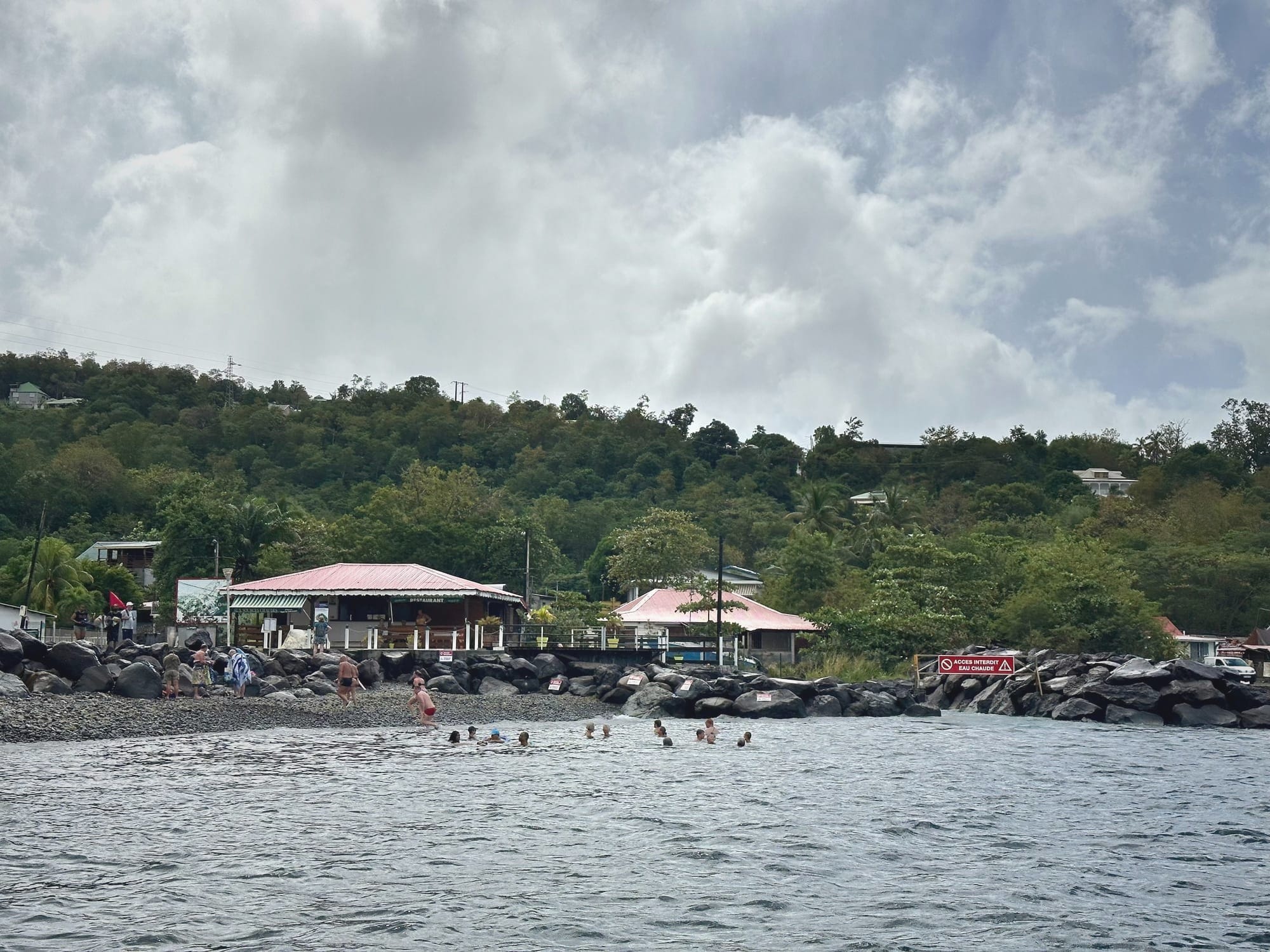
Guadeloupe has so much to offer a curious traveler, and I would encourage spending some time exploring more than just Îles des Saintes. We were also briefly anchored near Deshaies and Bouillante and did one dive in each spot. Pointe du Gros Morne near Deshaies, and Piscine near Îlet à Goyaves, both had incredibly healthy coral. Don't miss the geothermal spring fed by La Soufrière volcano in the corner of the bay in Bouillante after your dive. Water from the spring comes out at 70 degrees Celsius, mixes with cooler ocean water, and makes for an incredibly soothing and unique social spot in the evenings. Water shoes are suggested but not necessary in our experience. We left Guadeloupe feeling like we'd just scratched the surface of this incredible country.
Location: Terre-de-Haut, Îles des Saintes — 15.87° N, 61.58° W